
The Best Retrospective Tools in 2026, Ranked by What Actually Matters
Most 2026 retro tool lists rank by feature count and logo size. Here's a ranking that judges what makes a retro better on Thursday, with honest cons for every pick.
6 min read
Side-by-side comparisons of features, pricing, and real-world usability for every retro tool worth considering. No paid placements, no affiliate rankings.
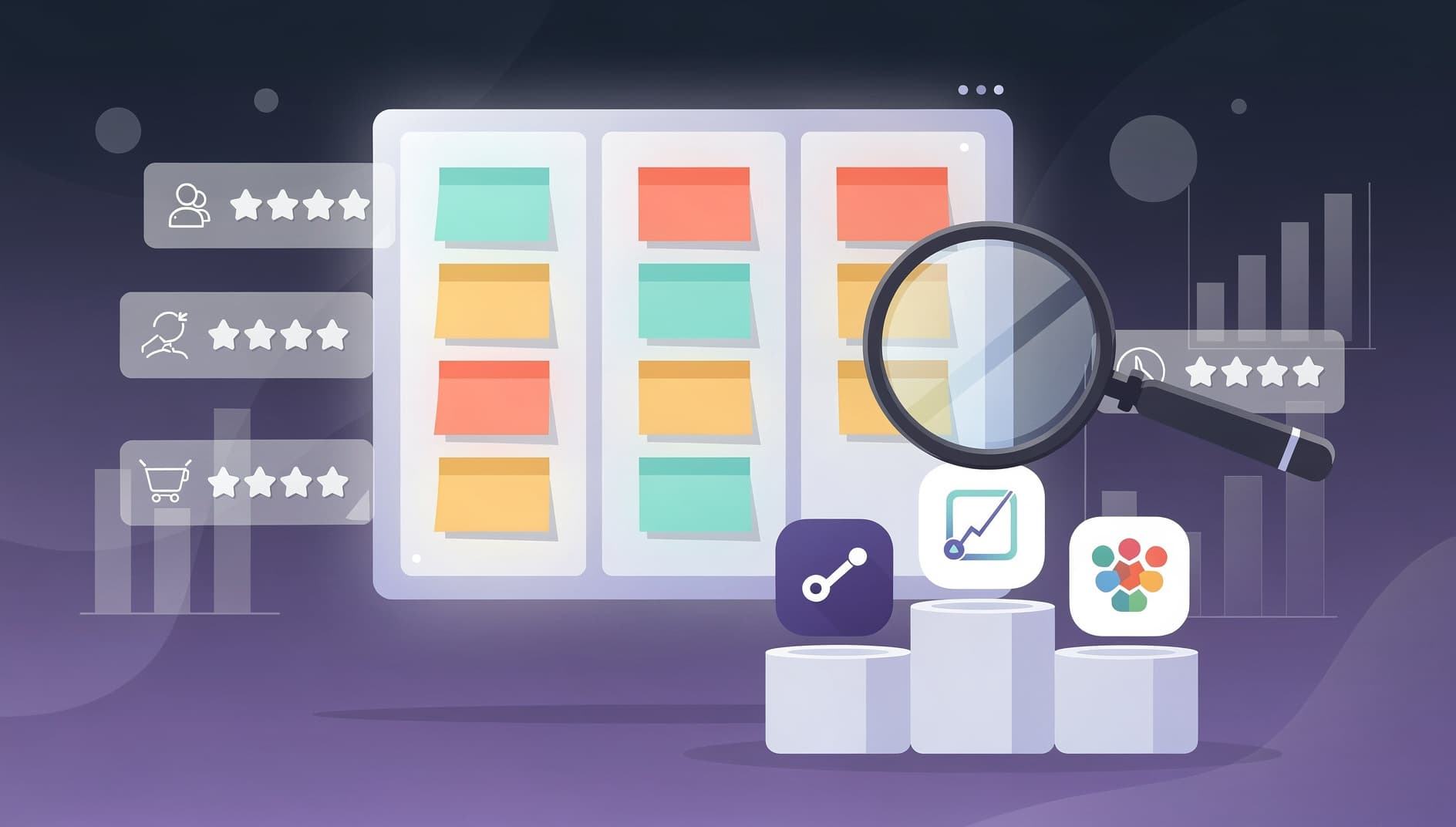
Ranked by features, usability, and value for agile teams
| # | Tool | Rating | Price | Link |
|---|---|---|---|---|
| 1 |  Miro Miro | 4.7 | Free tier available | View Review |
| 2 |  Parabol Parabol | 4.6 | Free tier available | View Review |
| 3 |  Kollabe Kollabe | 4.5 | Free tier available | View Review |
| 4 |  EasyRetro EasyRetro | 4.4 | Free tier available | View Review |
| 5 |  TeamRetro TeamRetro | 4.3 | From $25/mo | View Review |
| 6 |  GoRetro GoRetro | 4.3 | Free tier available | View Review |
| 7 |  Retrium Retrium | 4.2 | From $39/mo | View Review |
| 8 |  Echometer Echometer | 4.2 | Free tier available | View Review |
| 9 |  FigJam FigJam | 4.1 | Free tier available | View Review |
| 10 |  ScatterSpoke ScatterSpoke | 4.1 | Free tier available | View Review |

Open-source teams wanting full ceremony support

Async retros and standups in Slack

Free anonymous retro boards

All-in-one agile ceremonies

Teams already using Miro for collaboration

Enterprise teams needing compliance

Whiteboard retros for Figma-native teams

Enterprise workshops and facilitation
All-in-one agile ceremonies
Enterprise teams needing compliance

Data-first whiteboard with StormAI
Teams already using Miro for collaboration
Whiteboard retros for Figma-native teams

Visual, canvas-style retrospectives
All-in-one agile ceremonies
Enterprise teams needing compliance
Every tool gets scored across seven categories — Ease of Use, Retro Toolkit, Enterprise, Integrations, Value, Fun Factor, and AI & Insights — each on its own 0-5 scale. The overall rating weighs ease of use and features most, since those decide whether your team actually opens the tool every sprint.
We use each tool hands-on first: setting up boards, inviting real participants, running a full retro, and testing the facilitator controls. We note how many clicks it takes to start a session, whether anonymous mode works, and if the free tier is genuinely usable.
Scores are out of 5, updated quarterly as tools change. No paid placements, ever.
Most 2026 retro tool lists rank by feature count and logo size. Here's a ranking that judges what makes a retro better on Thursday, with honest cons for every pick.

Thirteen retro tools advertise a free plan. Most free tiers hit a wall by sprint three. Here's what each one really includes, where it breaks, and which ones a team can run on for months.
It's software built specifically for running sprint retros. Your team logs in, drops feedback into columns (what went well, what didn't, what to change), votes on items, and tracks action items. Most tools also keep a history so you can look back at past retros.
You can get by with sticky notes or a shared doc, honestly. But if you're running retros every sprint, a dedicated tool saves real time. The big wins are anonymous feedback (people actually say what they think), action item tracking that carries over between sprints, and not having to rebuild your board from scratch every two weeks.
Free tiers usually cap you at a few boards or a handful of team members, and your retro history might get wiped after 30 days. Paid plans remove those limits and typically add Jira/Slack integrations, AI summaries, and admin controls. For a small team, free is often fine. Once you're past 10-15 people or need to track trends over time, paid starts making sense.
At the end of every sprint is the standard cadence, so every 1-2 weeks for most teams. Some also run them after a big release or a production incident. What matters more than frequency is actually doing something with the output. A retro every two weeks where nothing changes is worse than a monthly one where the team follows through.
Low friction, mostly. If it takes more than a minute to set up a retro, people will dread it. After that: anonymous feedback so quieter team members speak up, templates so you're not starting from zero, and action item tracking that actually persists. Jira or Slack integration is a nice bonus. AI grouping and summaries are newer features that genuinely help for larger teams.