
The 3 Retro Metrics Worth Tracking (and the Ones That Lie)
Most retro dashboards track vanity numbers. Here are the three metrics that actually predict whether your team is improving, and the popular ones to ignore.
6 min read
AI grouping, summaries, sentiment analysis, and the analytics that turn retro exhaust into signal.
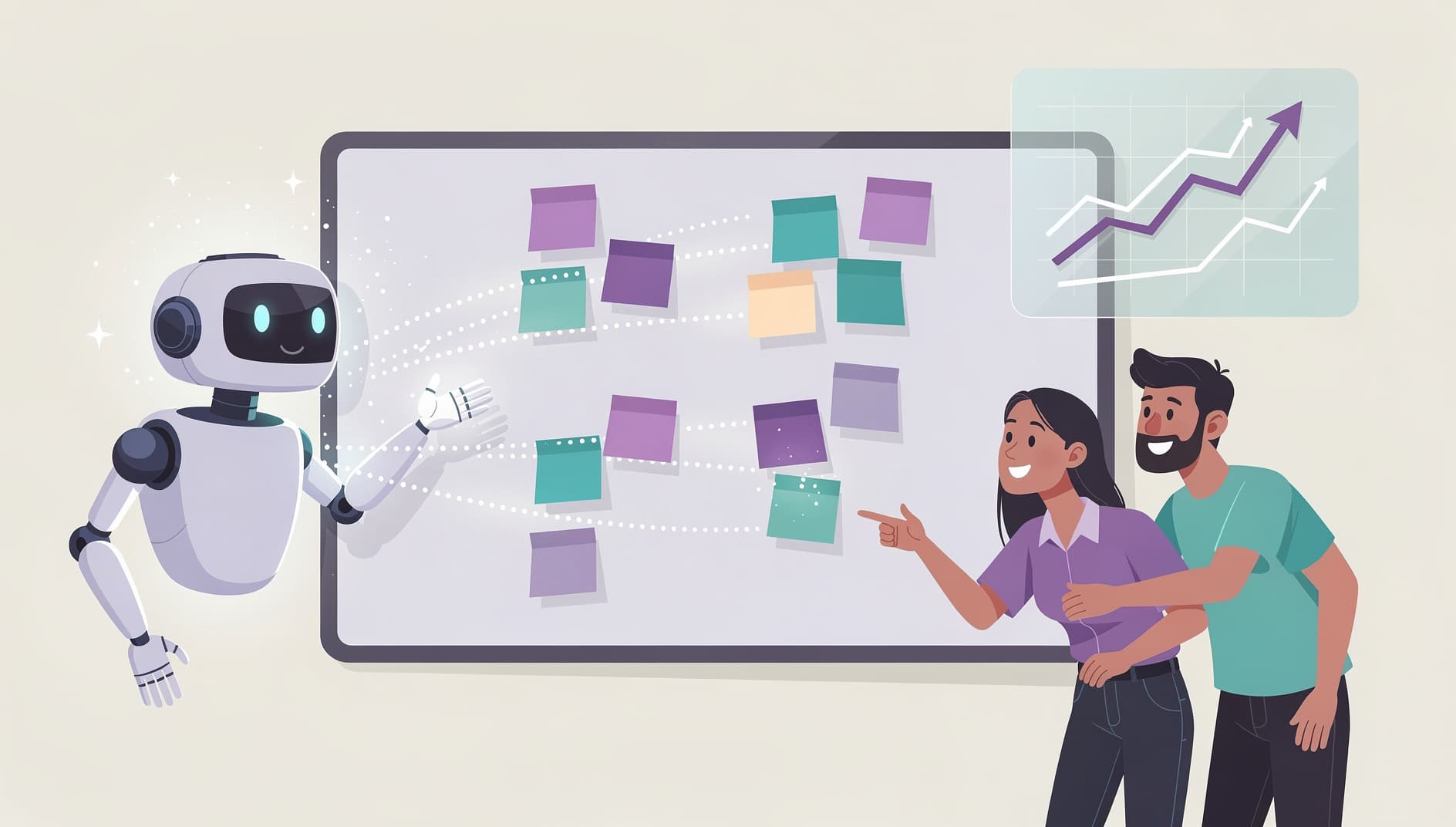
Every retro tool added an AI badge in the last two years. Far fewer added AI that changes the meeting. This page ranks the tools where the AI does real facilitation work, and is honest about where features are gated behind trials, credits, or enterprise plans.
The AI features that matter in practice are unglamorous: grouping forty stickies into themes so nobody spends ten minutes dragging cards, writing a summary someone will actually read, and tracking sentiment across sprints so you can see whether anything is improving. Template generation and chatbots are nice; those three are the job.
Our AI & Insights score also covers analytics, because a sentiment trend without a dashboard is a party trick. Tools that track participation, engagement, and action-item follow-through over time score higher than tools with a single flashy summarize button.
Ranked by our AI & Insights score: ai summaries, grouping, sentiment analysis, and analytics.

The most complete AI kit among the retro specialists: grouping by semantic similarity rather than keywords, summaries you can steer with custom instructions, sentiment and engagement trends across sessions, an AI template generator, and AI standup digests. Everything is included in the flat price, with no credit meter.
Read the full Kollabe review
AI summaries, AI grouping, and sentiment analysis woven into a mature guided-facilitation flow. The strongest choice when you want AI plus the enterprise checklist in one purpose-built retro tool.
Read the full TeamRetro review
StormAI groups stickies by theme, summarizes selections back onto the board, sorts cards by sentiment, and builds templates from a plain-language prompt, running on a dedicated Azure OpenAI instance. The catch: it is trial-gated on Business plans and admin-activated on Enterprise.
Read the full Stormboard review
Clusters stickies by keyword, author, and sentiment, summarizes boards with Catch-up, and now runs multi-step AI workflows with Sidekicks. The breadth is unmatched; the credit metering means heavy users climb plans faster than they expect.
Read the full Miro review
Built its identity on retro analytics before AI was fashionable: AI summaries and sentiment analysis feed dashboards aimed at engineering leaders who want cross-team patterns, not just per-meeting recaps.
Read the full ScatterSpoke review
Reads the tone of every standup and retro answer, tracks team mood over time, classifies blockers automatically, and answers conversational questions about what is blocking the team. The best passive sentiment signal in the directory, all inside Slack.
Read the full Geekbot reviewScores come from hands-on testing across seven categories and are updated as tools change. No paid placements, no affiliate rankings. See the full methodology on our about page or browse all 22 tools.
The manual clustering phase is the most tedious ten minutes of any retro. AI grouping erases it. Quality varies: semantic grouping (Kollabe, StormAI) beats keyword matching, and the difference shows the first time two differently-worded cards about the same problem land in one group.
A generic recap of your retro reads like meeting minutes nobody asked for. Look for summaries you can direct: Kollabe accepts custom instructions, Miro summarizes selections. The test is whether the output is something you would actually paste into your team channel.
Knowing this retro skewed negative is trivia. Knowing sentiment has declined three sprints running is a signal. Favor tools that chart mood over time (Kollabe, Geekbot, ScatterSpoke) over ones that score a single session.
AI pricing models differ sharply. Kollabe and TeamRetro include AI in the plan price. Miro and FigJam meter by credits. StormAI is a 30-day trial on Business plans with unclear renewal pricing. A team that leans on AI grouping every sprint should price the tier where that is actually sustainable.
Most retro dashboards track vanity numbers. Here are the three metrics that actually predict whether your team is improving, and the popular ones to ignore.
Most teams finish fewer than half the action items they write in retros. Here's why retro action items die, and a simple system to make yours stick.
Distributed across time zones? Here's how to run an async retrospective that gets real participation and real follow-through, not a dead doc nobody reads.
The mature features are automatic grouping of similar cards, generated summaries of the discussion, sentiment analysis on feedback, action-item suggestions, and template generation from a prompt. The newer wave adds conversational insights, such as asking Geekbot what blocked the team this week. Nothing yet replaces the actual conversation, and the good vendors do not claim otherwise.
For speed, unquestionably: it turns a ten-minute sorting phase into seconds. For quality, semantic approaches group cards by meaning and routinely catch pairs a rushed facilitator would miss. Most tools let you adjust the result afterward, so the practical workflow is AI first pass, human touch-up.
Usually to some model provider, yes, and the details vary by vendor. Stormboard runs a dedicated Azure OpenAI instance; Parabol states customer data is not used for training and lets enterprises disable AI; Echometer lets you switch AI off entirely. If retro content is sensitive at your org, ask each vendor which provider they use and whether AI can be disabled org-wide.
Fewer than the marketing suggests. FigJam's free tier includes 150 AI credits a day, Parabol's free plan includes 3 AI summaries, and Miro's free plan gets 10 credits a month per team. Kollabe includes all AI on its paid team plan with no metering, which ends up more generous in practice. Fully free tools like RetroTool and IdeaBoardz have no AI at all.
Grouping and summaries save real minutes at any team size. Trend analytics earn their keep more slowly: a five-person team talking honestly every sprint mostly knows its own mood. The dashboards start paying off for coaches and leads watching several teams, where patterns are invisible from inside any single retro.