

Quick Verdict
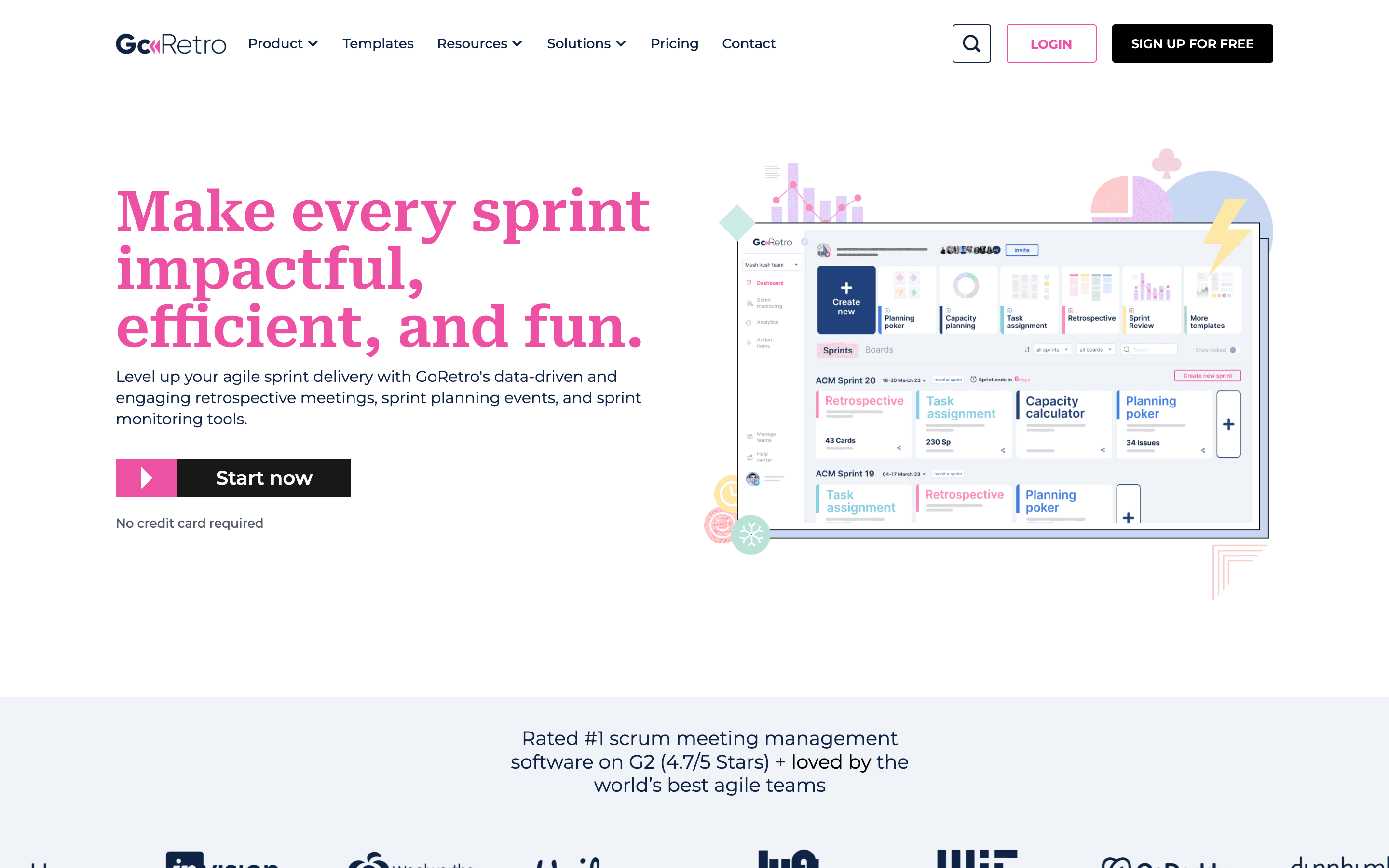
GoRetro and TeamRetro both try to be more than a retro board, but they chose different directions. GoRetro added sprint monitoring, planning poker, and capacity planning. TeamRetro went with health checks, guided facilitation, and enterprise compliance.
TeamRetro wins this one for most teams. AI-powered card grouping, sentiment tracking over time, 56+ templates, 15 integrations, SOC 2 Type II. It's a lot. GoRetro's advantage is a free tier and the deepest Jira integration in the retro tool space, pulling sprint data directly into the platform for monitoring. But outside Jira, GoRetro only connects to Slack, its AI capabilities are hard to verify, and its public changelog hasn't been updated since May 2023.
If your team lives in Jira and wants a free retro board with planning poker, GoRetro works. For anything beyond that, TeamRetro is the better pick.
Feature Comparison
Both cover the retro basics: anonymous feedback, voting, timers, action items with owners and due dates, 30+ templates. The gap shows up everywhere else.
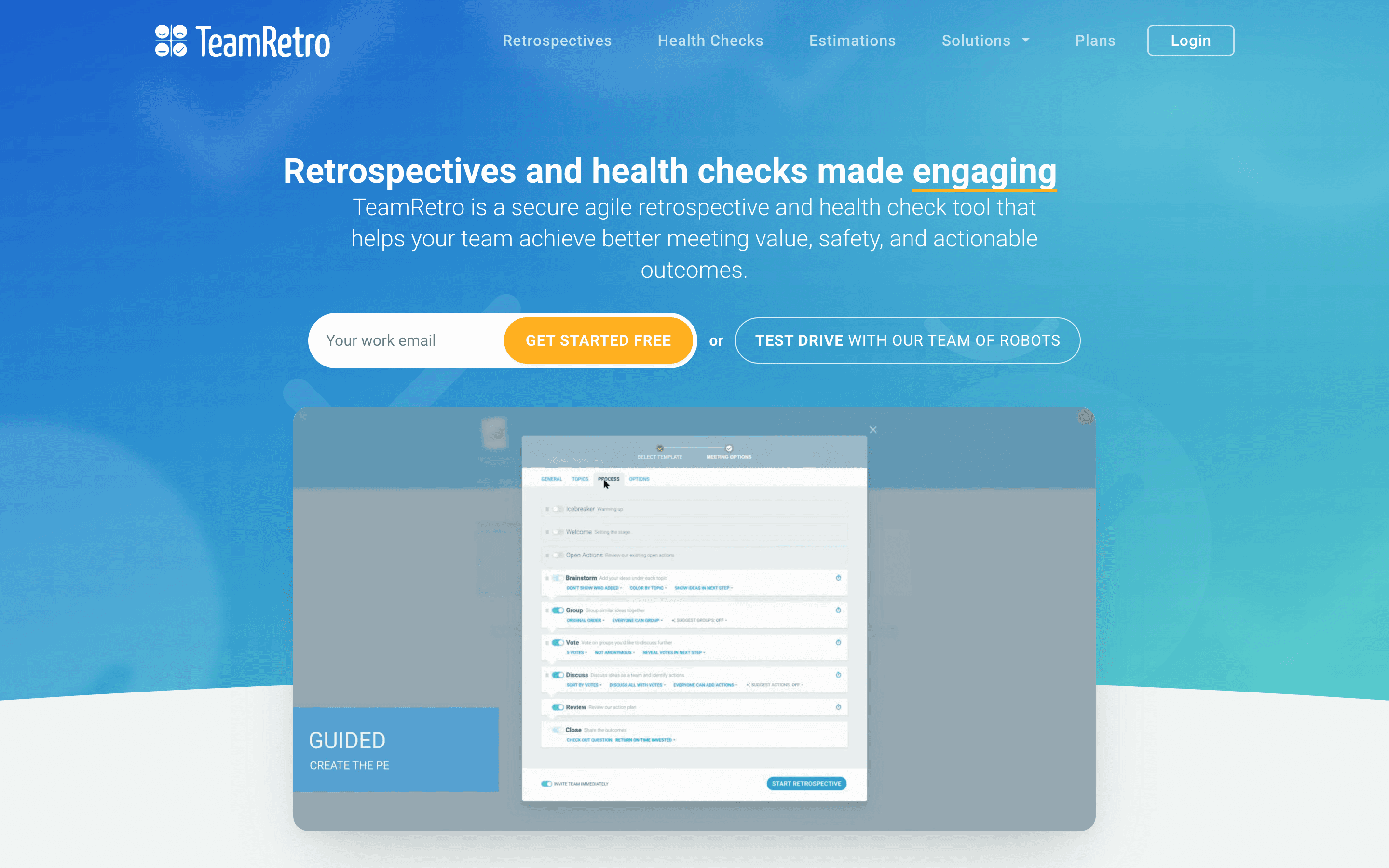
TeamRetro walks facilitators through a structured workflow (brainstorm, group, vote, discuss, assign actions) with presentation mode keeping the whole team on the same screen. Its AI groups related cards automatically during affinity mapping, which saves real time when a retro generates 50+ cards. Sentiment analysis tracks team mood with heat maps and trend lines over time. Engineering managers actually get data they can bring to skip-levels and planning conversations.
GoRetro gives facilitators manual controls: hide cards, disable voting, set vote limits, run a timer. Solid basics, but there's no guided workflow and no AI grouping. The "happiness index" is a 1-5 scale per retro, not the longitudinal sentiment data TeamRetro produces.
TeamRetro has standalone health checks with four pre-built models, 15 maturity templates, and trend tracking over time. GoRetro doesn't have health checks at all, just a happiness score per retro. If your team runs health checks alongside retros, TeamRetro saves you a separate subscription.
GoRetro's edge is sprint monitoring. If your team uses Jira, GoRetro pulls in sprint data, tracks velocity, analyzes cycle times, and flags mid-sprint issues like bug spikes. TeamRetro doesn't import anything; all 15 of its integrations are export-only. If you want your retro tool to double as a sprint analytics dashboard, GoRetro is the only option here.
Pricing Comparison
Both use per-team pricing (not per-user), which is good for larger teams. GoRetro has a free tier; TeamRetro doesn't.

GoRetro
Premium plan, billed annually
- Free tier: 1 team, 5 boards, no exports
- Sprint Pro $49/mo: adds planning poker
- Organization: custom pricing with SSO
- Per-team, unlimited users

TeamRetro
Single Team, up to 25 members
- No free tier — 30-day trial only
- Small Org $60/mo: 3 teams, unlimited members
- SSO/SAML included on every paid plan
- Per-team, unlimited users (except Single Team)
GoRetro's free plan is limited to 1 team, 5 public boards, and no exports. It's enough to try the tool, not enough to run a real retro practice. Premium at $29/month adds unlimited boards, Slack integration, and exports. Sprint Pro at $49/month includes planning poker and capacity planning.
TeamRetro starts at $25/month for one team of up to 25 members, with unlimited retros, health checks, and planning poker included. No exports paywall, no feature gating. The Small Organization plan at $60/month covers 3 teams with unlimited members. Worth noting: SSO/SAML is included on every paid plan, not locked behind an enterprise tier. GoRetro gates SSO behind custom Organization pricing.
At the single-team level, TeamRetro is $4/month cheaper and includes health checks and planning poker that would cost $49/month on GoRetro's Sprint Pro plan.
Ease of Use
GoRetro is simpler to pick up. Pick a template, create a board, share the link. Guest access means participants don't need accounts. If your team wants to start collecting feedback in 30 seconds, that matters.
TeamRetro does more, so there's more to learn. The guided workflow has distinct phases, and first-time facilitators need to figure out when to advance from brainstorming to grouping to voting. Not hard, but not instant either. The payoff is that retros run consistently even when your newest Scrum Master is facilitating. After two or three sessions, the workflow clicks.
Neither tool has native mobile apps. TeamRetro's responsive web design works on phones and tablets. GoRetro's mobile experience isn't well-documented.
Integrations
This is where the gap is widest. TeamRetro connects to 15 tools: Jira (with two-way action item sync), GitHub, Linear, Azure DevOps, Confluence, Slack, Trello, Microsoft Teams, Asana, Basecamp, ClickUp, Monday.com, Notion, Shortcut, and GitLab. Whatever your team tracks work in, TeamRetro probably exports to it.
GoRetro connects to Jira and Slack. That's it. No GitHub, no Linear, no Azure DevOps, no Confluence, no Trello. If your team tracks work outside Jira, you're copying action items manually.
GoRetro's Jira integration does something TeamRetro's doesn't: it pulls sprint data in for monitoring and analytics. TeamRetro's Jira connection is export-only. If sprint monitoring inside your retro tool matters to you, GoRetro is the only choice between these two.
GoRetro's Jira integration goes deeper on the import side: backlog import for planning poker, sprint velocity tracking, cycle time analysis. TeamRetro added two-way Jira sync for action items in December 2025, but it still doesn't pull sprint data in. GoRetro wants to be your sprint dashboard. TeamRetro wants to be your meeting platform. Pick accordingly.
AI and Automation
TeamRetro shipped a lot of AI in 2025. Card grouping suggests clusters during affinity mapping. Meeting summaries generate automatically. Sentiment analysis produces timeline visualizations and heat maps across retros. AI-generated icebreaker questions kick off sessions. They upgraded the underlying models in July 2025.
GoRetro's AI situation is unclear. The marketing site mentions a "meeting recap" feature, but competitor comparison pages (including TeamRetro's) say GoRetro lacks AI summarization and grouping. GoRetro's own retrospective features page doesn't mention AI at all. There may be a basic recap feature that isn't truly AI-powered, but it's hard to tell from the outside.
If AI-assisted facilitation matters to you, TeamRetro is the safer bet.
Who Should Choose Which?
Choose GoRetro if…
- Your team lives in Jira and wants sprint monitoring data inside the retro tool
- You need a free tier to get started without a purchase order
- You want planning poker with Jira backlog import and estimate sync
- Sprint velocity tracking and capacity planning matter more than guided facilitation
- Your team is small and doesn't need 15 integrations
Choose TeamRetro if…
- You need guided facilitation for consistent retros across teams
- Compliance matters: SOC 2 Type II, GDPR with data residency, SCIM provisioning
- You want health checks and sentiment tracking alongside retros
- Your team uses GitHub, Linear, Azure DevOps, or tools outside the Atlassian ecosystem
- SSO/SAML on every paid plan matters to your IT team
Final Recommendation
TeamRetro gives you more tool for less money. At $25/month you get guided facilitation, AI grouping, health checks, planning poker, SOC 2, and 15 integrations with SSO on every plan. It makes retros work even when your best facilitator is on vacation.
GoRetro has a narrower niche: Jira-centric teams that want sprint monitoring baked into their retro tool. The free tier helps when budget approval is slow. But outside of Jira, GoRetro connects to one tool (Slack), its AI capabilities are hard to verify, and the lack of public updates since May 2023 is worth considering.
Sprint analytics and a free starting point? GoRetro. Anything beyond that? TeamRetro.