

Quick Verdict
These two chase the same customer, distributed agile teams, from opposite directions.
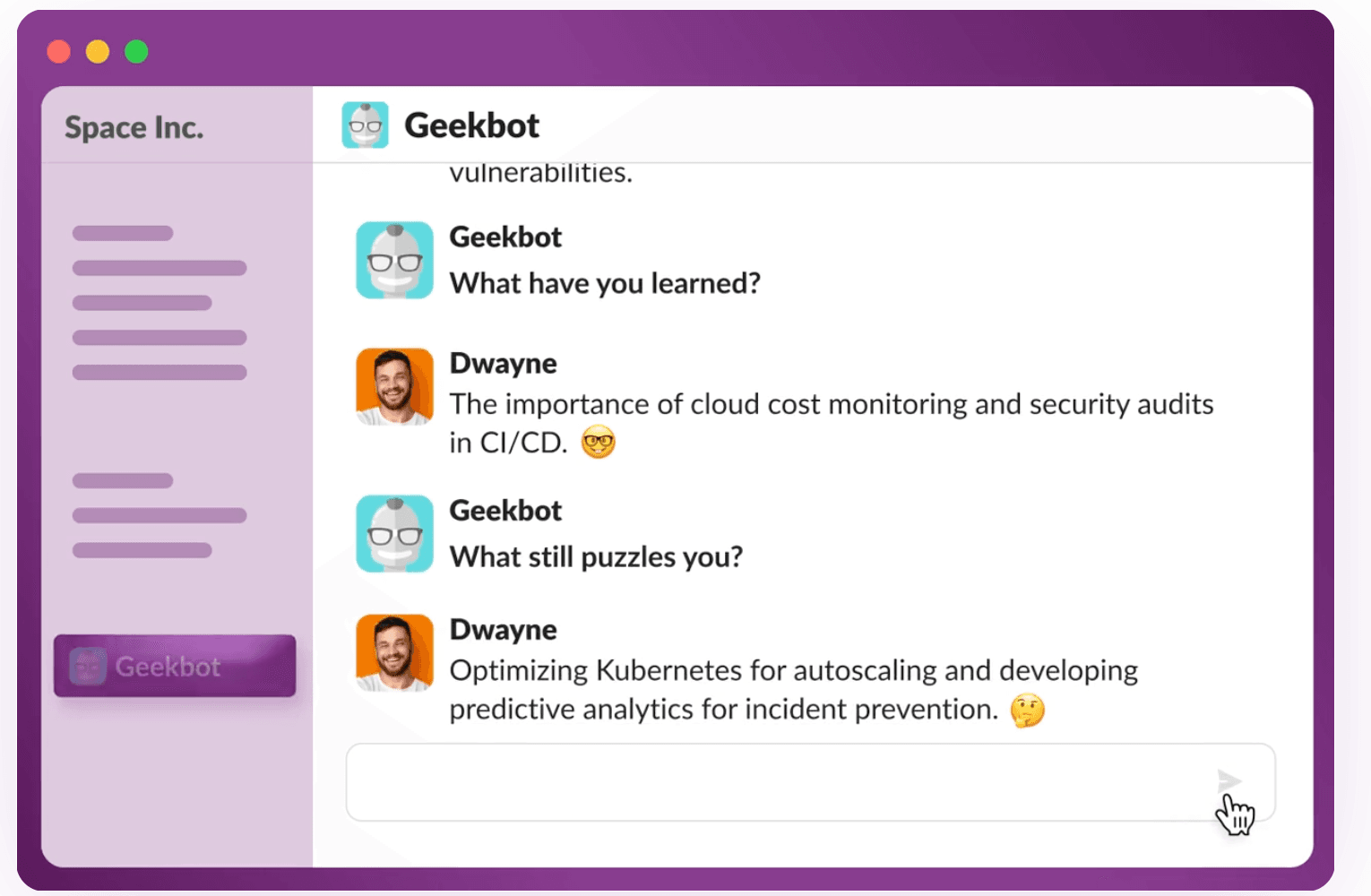
Geekbot starts from Slack. Standups, retros, polls, and surveys are scheduled questions answered in DMs, compiled to a channel, and read by an AI that tracks mood. Its standup product is the best we have reviewed, and its review scores (4.6 G2, 4.9 Capterra) reflect a tool people genuinely like.
Parabol starts from the meeting. Its retros are the most thoughtfully structured in this directory: anonymous reflections, multiplayer grouping, dot voting, threaded discussion, and action items that carry over and sync to your tracker, all walked through phase by phase. It is open source, runs async or live, and its free tier covers two full teams.
Standup-first teams should buy Geekbot. Everyone else should notice that Parabol does 80% of Geekbot's job while Geekbot does 30% of Parabol's.
Feature Comparison
The retro gap is wide. Parabol runs a real meeting: reflections stay hidden while writing to prevent anchoring, the team groups cards together in real time, votes anonymously, discusses each topic in threads with emoji reactions, and leaves with assigned action items that reappear next meeting and push to Jira, GitHub, or GitLab. The Reflect-Group-Vote-Discuss flow is guided, so a first-time facilitator cannot really get lost.
A Geekbot retro is four questions in Slack. Custom questions, timezone-aware delivery, anonymous responses on paid plans, AI-summarized results. Useful, frictionless, and structurally shallow: no voting, no grouping, no timer, no tracked action items. What Geekbot calls a retrospective, Parabol would call the Reflect phase.
Standups reverse it, though by less. Geekbot's standups are deeper: per-user delivery times, non-respondent-only reminders, out-of-office periods, thread posting, mood trends on a dashboard. Parabol's async standups cover custom questions, AI summaries, and Slack/Teams notifications, which is most of the job, but Geekbot's polish here is why people pay for it.
Parabol also brings Sprint Poker — hidden-vote estimation with JQL ticket import and story-point write-back to Jira, GitHub, and GitLab. Geekbot has no estimation feature at all, so teams that size work need a second tool with Geekbot and get it included with Parabol.
Both offer icebreakers, health checks in some form (Parabol's anonymous team health polls on paid plans; Geekbot's passive sentiment trends), and CSV export.
Pricing Comparison
Two of the most generous free tiers in the category, then per-user pricing either way.

Geekbot
Annual; $3 monthly. Free up to 10 users
- Unlimited standups and retros on free tier
- Pay only for active participants
- Anonymity and AI from Basic plan
- Polls and surveys billed separately

Parabol
Team plan. Free covers 2 teams, 10 meetings/month
- Free: 2 teams, unlimited users, all ceremony types
- Inactive users automatically not billed
- Retros, poker, standups, check-ins included
- Open source (AGPL), self-hostable at Enterprise
Geekbot is the cheaper paid product: $2.50 per participant against Parabol's $8 per active user. A 15-person team pays about $37.50 versus $120 per month. That is a real gap, and for a team buying standups alone, decisive.
But look at the free tiers first, because many teams never leave them. Geekbot's free plan is unlimited ceremonies for up to 10 users. Parabol's covers 2 teams of unlimited size with 10 meetings a month and 30-day history. A biweekly-retro, daily-async-standup team fits inside Parabol free with room to spare.
Note what paid unlocks: Parabol gates AI grouping, AI summaries, and health checks behind Team; Geekbot gates anonymity, AI, and CSV export behind Basic. Both free tiers are honest but not complete.
Ease of Use
Geekbot wins adoption. There is nothing to install for participants, no accounts, no tabs. Answering a DM is the entire user experience, and participation rates show it.
Parabol wins the meeting. Its guided phases make it arguably the easiest real retro tool to facilitate: the software advances the agenda, the timer is per-phase, and grouping is multiplayer drag-and-drop that a team learns in one session. But it is still a separate app that people must open, and its interface, while clean, is a product to learn rather than a chat to answer.
One friction note on Parabol: facilitators cannot see when participants finish a phase, a long-standing gripe. One on Geekbot: writing good retro questions is now your job, because the tool provides structure only through what you ask.
Integrations
Geekbot: native Slack and Microsoft Teams (its home), direct Jira, Zapier for the long tail, a public API, and an MCP server for AI-agent access. Polls and surveys are Slack-only.
Parabol: Jira, GitHub, GitLab, Azure DevOps, and Linear with two-way flow (ticket import, estimate write-back, action-item creation), plus Slack, Teams, and Mattermost notifications and Google Calendar scheduling. Enterprise adds Jira Data Center and self-managed GitLab.
Different centers of gravity again: Geekbot integrates with where you talk, Parabol with where you track. Parabol's Slack presence (reminders and summaries) is real but shallow next to Geekbot's; Geekbot's tracker presence (Jira plus Zapier) is shallow next to Parabol's.
AI and Automation
Geekbot's AI is its analytical edge: sentiment on every answer with trends over time, blocker and topic classification, conversational insights, and AI-generated poll questions. For passively understanding a distributed team, nothing here beats it.
Parabol's AI serves the meeting: suggested groupings of reflections, auto-named groups, meeting summaries (3 free, then paid), and AI icebreakers. Its 2025 Custom Team Insights beta lets you run your own prompts across meeting data, which points somewhere interesting.
Automation beyond AI: both schedule recurring ceremonies and nudge non-participants; Parabol adds calendar integration, Geekbot adds out-of-office intelligence.
Who Should Choose Which?
Choose Geekbot if…
- Standups are the main event; retros are a quarterly pulse
- Ceremonies must live inside Slack or Teams, full stop
- Cheapest paid path for small async-only teams
- Mood and blocker trends without running surveys
- Tool-fatigued teams that will not open another app
Choose Parabol if…
- You want real retros: hidden reflections, grouping, voting, discussion
- Action items must sync to Jira, GitHub, or GitLab and carry over
- Sprint Poker included instead of buying an estimation tool
- Free tier covers 2 full teams with every ceremony type
- Open source matters, or Enterprise self-hosting does
Final Recommendation
For most agile teams comparing these two, Parabol is the better platform. It runs the complete ceremony stack (retros with actual structure, poker, standups, check-ins), its free tier is the most usable in the category, and its action items actually land in your tracker. It sits at #2 in our rankings for exactly these reasons.
Geekbot remains the right buy for a specific, large group: standup-first teams in Slack who want the lightest possible touch. Its standups beat Parabol's, its sentiment layer is unique, and its per-participant pricing is friendly to small teams.
The pairing many distributed teams land on: Geekbot for the daily heartbeat, Parabol (or another board-based tool) when the team needs to actually talk. If you are only buying one, buy the one that runs a real retrospective.