

Quick Verdict
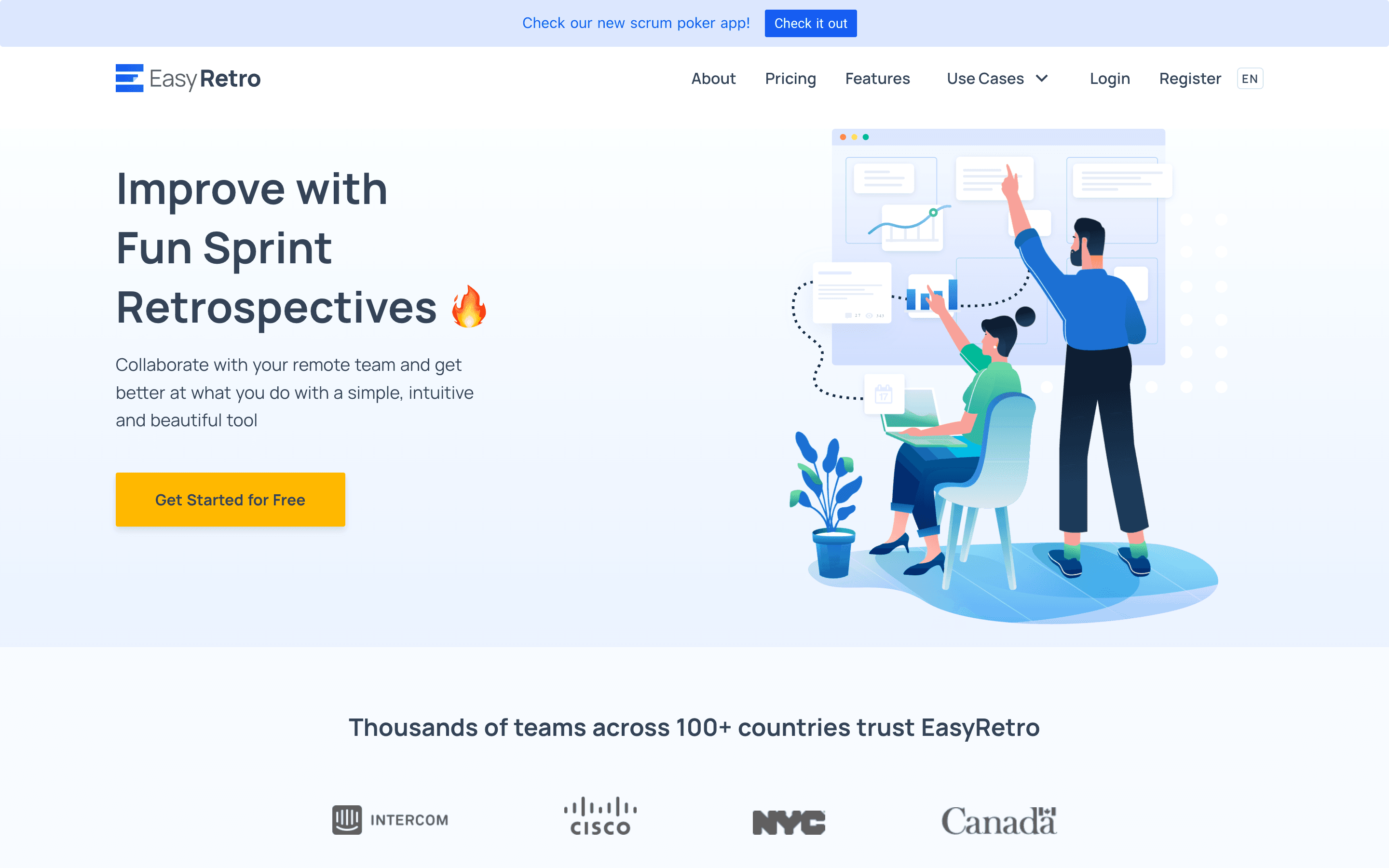
EasyRetro is the bigger, more established tool. Over a million retros run since 2015, 200+ templates, AI summaries, and integrations with Jira, Confluence, Slack, and Trello. It does one thing (retro boards) and does it well.
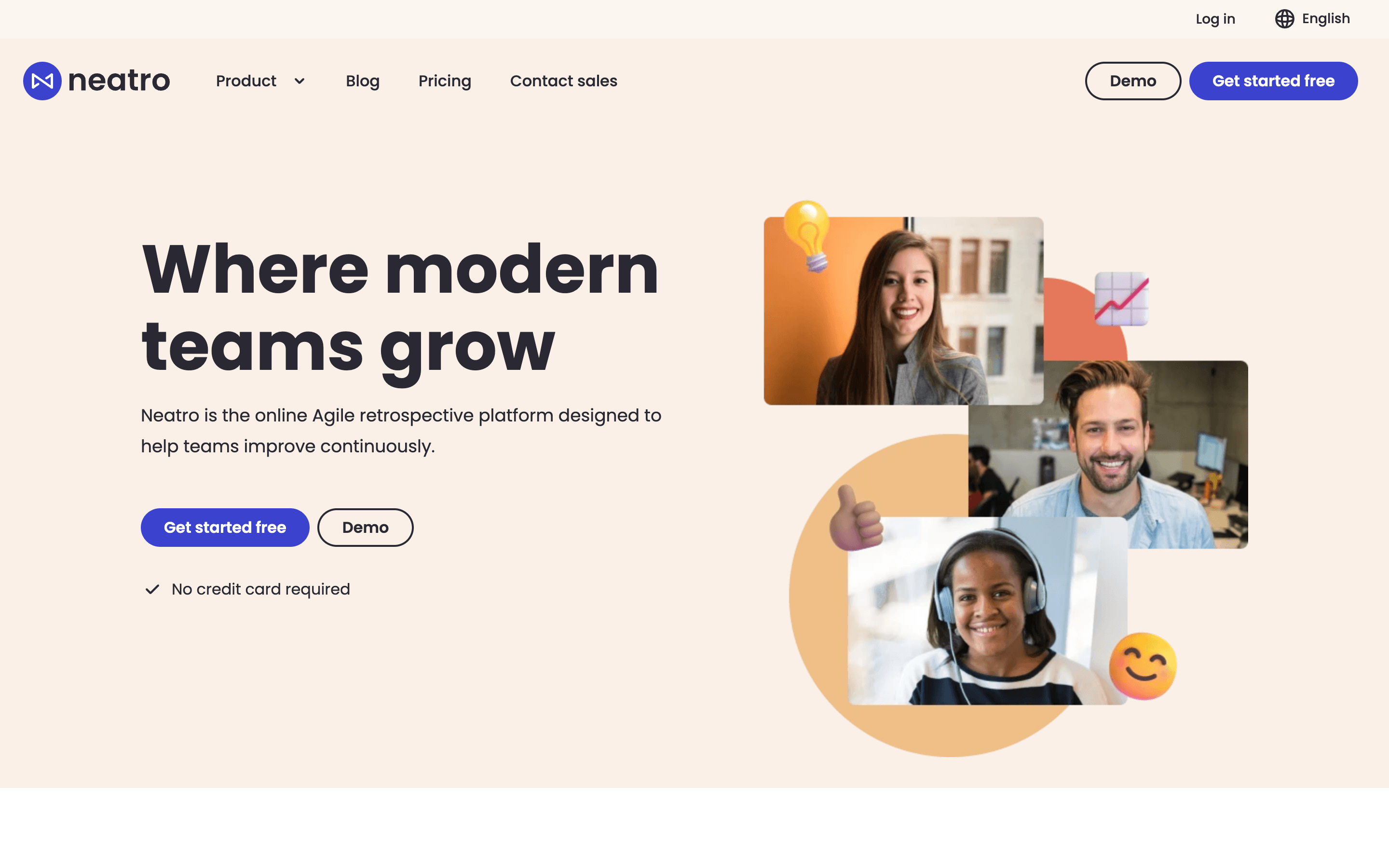
Neatro is smaller and more opinionated. Built by a three-person team in Quebec, it wraps every retro in a structured 4-step workflow: Collect, Group, Vote, Action Plan. It also adds health checks and icebreakers that EasyRetro doesn't touch. If you want a facilitator-guided experience with built-in team health tracking, Neatro is worth a look. For everything else, EasyRetro is the safer bet.
Feature Comparison
Both tools nail the retro basics: anonymous feedback, dot voting, timers, action items, templates, and export options. The differences show up in how they handle everything around the core retro flow.
EasyRetro leans into creative flexibility. 200+ templates across multiple languages, GIF support on cards, a card drawing tool, customizable board backgrounds, dark mode. Participants don't need accounts, just a link and a name. It's a canvas you can make your own, which matters for teams that run themed retros or want to keep the format fresh. The AI summary feature (added January 2024) generates a recap at the end of each session. A separate AI template generator lets you spin up custom formats from a prompt.
Neatro goes the other direction. Every retro follows the same 4-step guided flow, and that structure is the point. The facilitator moves the group through Collect, Group, Vote, and Action Plan in sequence. Incomplete action items from previous retros surface automatically at the start of each new session. There's a ROTI (Return on Time Invested) survey baked into every retro close.
These are small things on their own. But they add up to a tool that takes facilitation discipline seriously.
Neatro's "Team Radars" (health checks) and icebreaker Question Game with 200+ prompts are standalone features, not just templates. EasyRetro doesn't offer either. If your team runs regular health check-ins alongside retros, that gap matters.
Where Neatro falls short is AI. It has none. No AI summaries, no AI grouping, no sentiment analysis. For a team of 15+ people generating dozens of cards, the manual grouping step is where Neatro's lack of automation hurts most.
Pricing Comparison
Both tools use flat-rate pricing (not per-user), but the models work differently in practice.

EasyRetro
Team plan — flat rate, 5 boards/month
- 200+ templates with AI generator
- Jira, Confluence, Slack, Trello
- Multi-format export (PDF, CSV, XLSX, DOCX)
- Free tier: 1 public board/month

Neatro
Premium — unlimited members per team
- Unlimited retros and history
- Health checks and icebreakers included
- Jira, GitHub, Azure DevOps export
- Free tier: 10 members, 30-day history
Neatro is $9/month cheaper on the base paid plan, and that $29/month gets you unlimited members and unlimited history per team. EasyRetro's $38/month Team plan caps you at 5 boards per month. If your team runs weekly retros, that's not enough. You'll need the $60/month Business plan.
Neatro's free tier is more generous too. Ten members and unlimited retros (with 30-day history) beats EasyRetro's single public board. For a small team testing the waters, Neatro's free plan is actually usable. EasyRetro's isn't.
The catch: Neatro locks integrations and exports behind the paid plan entirely. On EasyRetro's free plan you at least get the board (limited as it is). With Neatro free, you can run retros but can't export anything or push action items anywhere.
Ease of Use
EasyRetro's decade of polish shows. Click a link, type your name, start adding cards. No account needed for participants. The interface is minimal by design: boards, columns, cards. Presentation mode lets facilitators reveal columns one at a time, and keyboard shortcuts speed up card creation for power users. Nobody asks "how do I use this?"
Neatro requires accounts for everyone, which adds onboarding friction. But the guided workflow compensates. Once you're in, the 4-step flow means the facilitator doesn't need to explain what happens next. The tool moves the group through each phase automatically. For new scrum masters who aren't confident running retros yet, that structure pulls real weight.
If your facilitators are experienced, EasyRetro's open canvas gives them more control. If you're training new scrum masters, Neatro's step-by-step workflow prevents the "now what?" moments that kill retro momentum.
Integrations
EasyRetro connects to the Atlassian stack: Jira Cloud (export cards and action items), Confluence (export boards as pages), Trello (export action items as cards). Slack sends notifications when boards are created. Microsoft Teams lets you embed boards as tabs. All export-only, no imports, but it covers the most common workflows.
Neatro's integration list is actually wider: Jira, GitHub, Azure DevOps, Asana, Monday.com, and iceScrum for action item export. If your team isn't in the Atlassian ecosystem, Neatro connects to more of the tools you probably use. The tradeoff? No Slack and no Confluence. If you need retro results posted to a Slack channel or saved as Confluence pages, that's EasyRetro's territory.
Neither tool has an API. Neither supports Zapier or webhooks. Both are export-only integrations — you can push action items out but can't pull anything in.
AI and Automation
This one is straightforward. EasyRetro has AI. Neatro doesn't.
EasyRetro's AI summary generates a board recap automatically. The AI template generator creates custom retro formats from a text prompt in 8 languages. Neither feature will change your life, but the summary saves the facilitator from writing up notes after the session. And the template generator is handy when you're tired of Start/Stop/Continue.
Neatro has zero AI features. No summaries, no grouping, no template generation, no sentiment analysis. Everything is manual. For a 5-person team this doesn't matter much. For a 20-person team producing 80+ cards, you're on your own with the grouping phase.
Who Should Choose Which?
Choose EasyRetro if…
- You want 200+ templates and creative features like GIFs, drawing, and custom backgrounds
- AI summaries and AI template generation matter to your workflow
- Your team lives in the Atlassian ecosystem (Jira, Confluence, Trello) with Slack notifications
- Zero-signup participation is important — external stakeholders join with just a link
- You want a proven tool with 1M+ retros run and a decade of iteration behind it
Choose Neatro if…
- You want guided facilitation that walks the team through each retro phase automatically
- Team health checks (Team Radars) and icebreakers are part of your regular practice
- Your team uses GitHub or Azure DevOps instead of Jira
- You prefer per-team pricing at $29/month with unlimited members and no board limits
- Action item accountability matters — you want incomplete items to resurface automatically
Final Recommendation
EasyRetro is the stronger tool for most teams. More templates, more integrations, AI summaries, and a zero-signup join experience that works for distributed teams with external participants. It's been around since 2015 and the rough edges are gone.
Neatro earns its spot for teams that care about facilitation structure over feature count. The guided workflow, automatic action item resurfacing, and Team Radars make it a solid choice for scrum masters who want retros to actually drive improvement instead of just generating sticky notes. At $29/month with unlimited members, it's cheaper too.
If you're choosing between the two and don't have strong feelings about guided facilitation or health checks, go with EasyRetro. It does more and connects to more. The AI features, basic as they are, put it a step ahead of a tool with none. If you're looking for something beyond pure retro boards, check out Parabol or Kollabe that cover retros, poker, and standups in one platform.